

Second Grade Art Lesson 30
Value Study, Part 2 Our Final Portrait
Objective:
The student will complete a final self portrait incorporating value into their work.
Materials:
white paper, pencil, mirrors if available
Procedure:
Today, for our last 2nd grade lesson we will do a self portrait and incorporate value into our work. Remind the students of last weeks lesson and have them explain what value is and how you get it. Tell them you want them to spend time looking carefully at their own face in the mirror. They will be guided through creating a portrait with proper proportions. Begin by drawing an egg shape for your head (your head is really not a circle). Next we will add the eyes. The eyes should be placed in the middle of the egg shape. Typically children draw their eyes way to far up on their head. Next draw a line for your nose, either an L shape or a slightly curved line. Draw your mouth just beneath your nose. There are three lines that make up your mouth. The top of the upper lip, the bottom of the lower lip and the dividing line between them unless you draw a big smile, then you need two lines for each your bottom and top lip. Next, draw of the shape of your hair. We tend to think of our hair as a lot of lines, try to look at the outside edges of your hair making a kind of wig. Draw two lines for your neck and continue with horizontal lines for your shoulders, making them go beyond your heads width. Finally, go back into your portrait and add value. Shade in areas of your face, neck and hair. Work hard to control your pencil and do not get in a hurry and start scribbling. Include a background to complete your portrait and use as many different values there as well. Be sure to refer to the grey scale you made in the last lesson. Examine your work and make sure that most of your paper is covered in value. Some areas should be left white but not a lot. Keep looking in the mirror to see if there is anything about your face that you can add to make it look more like you.
Conclusion:
Mount the children's work and display them for everyone to enjoy. Have the children look at them and count the different values in each drawing. See if they can name who is who. Encourage them to do several self portraits on their own to help them improve their work over time.
Artwork and Examples used in this lesson
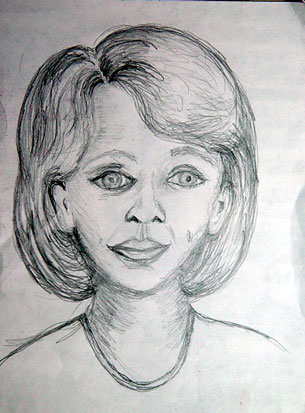
Teachers Example
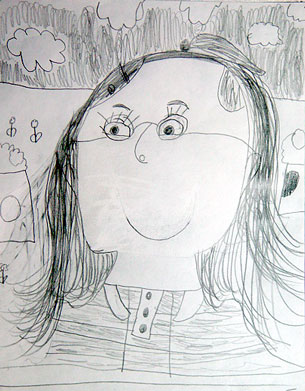
Student Artwork
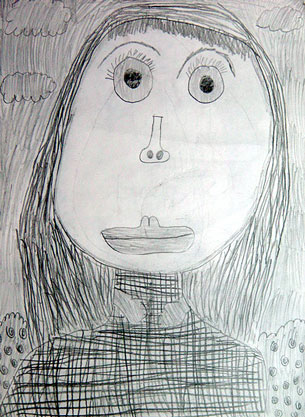
Student Artwork
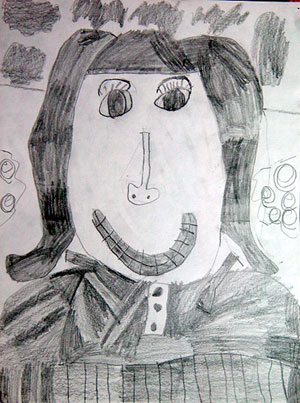
Student Artwork




Arttango © All Rights Reserved 2013. All logos and images used on this site are the property of the rightful owner