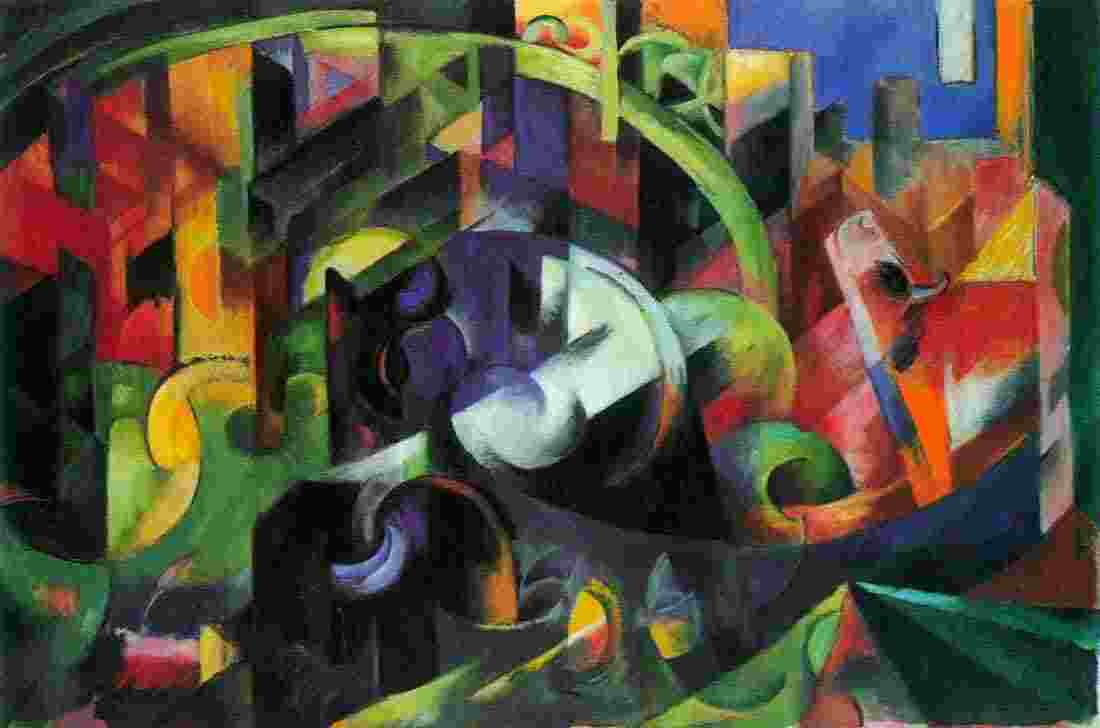
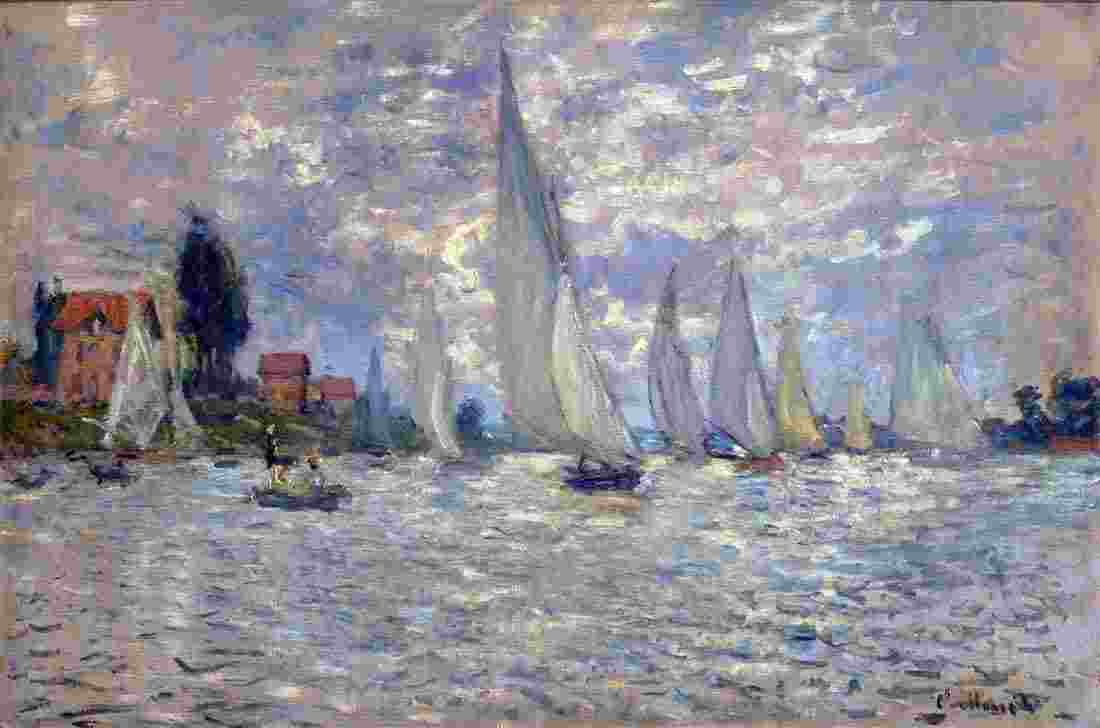
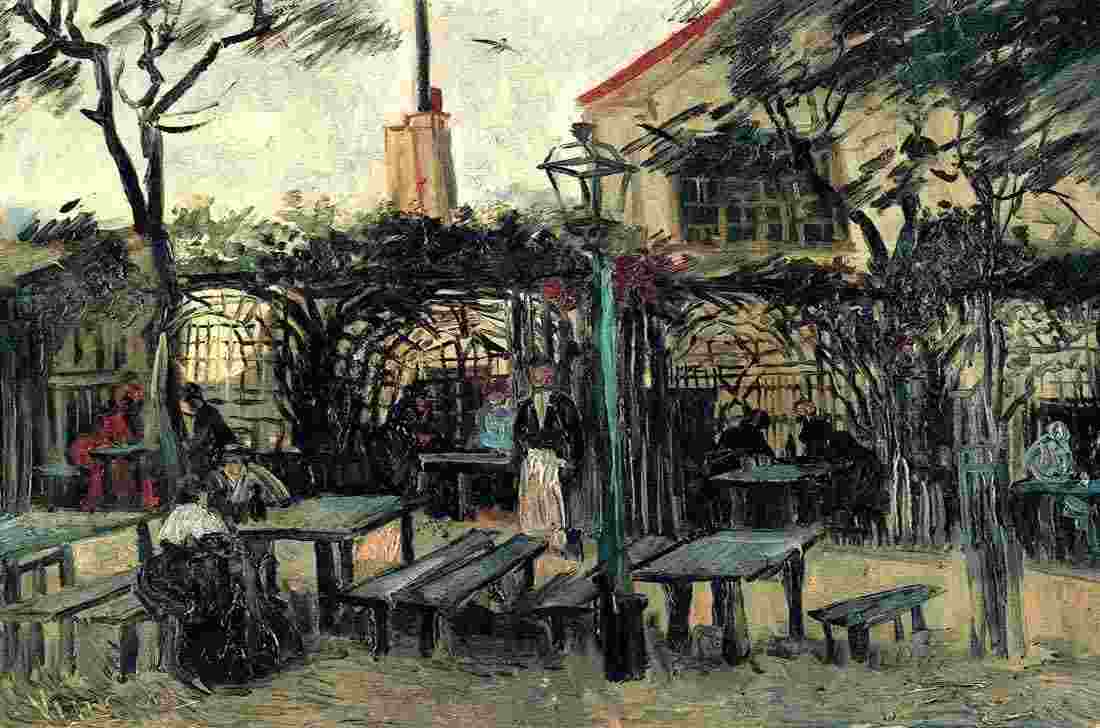



Kindergarten Art Lesson 21
Flower Study, Part 2 Our Flower Study with Warm and Cool Colors
Objective:
The student will learn the difference between warm and cool colors and complete the flower drawing from last lesson by painting the flower in warm colors and the background in cool colors.
Materials:
Red, yellow, orange, blue, green and purple tempera paint, a collection of brushes, large, medium and small and the flower drawings from last lesson
Procedure:
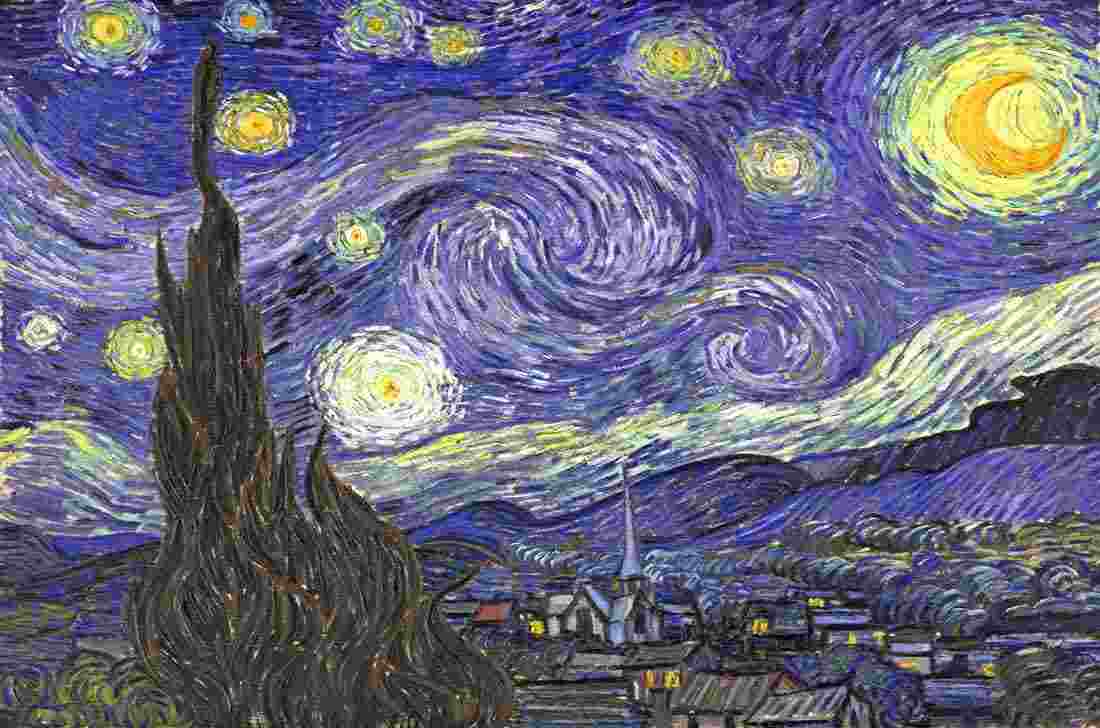
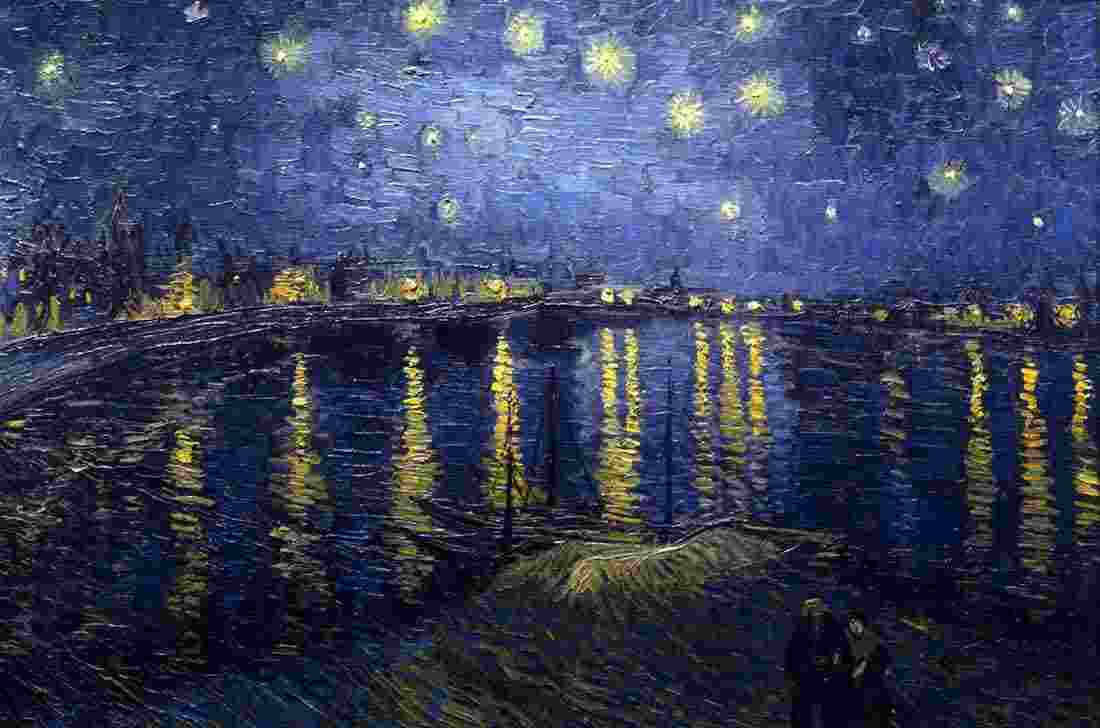
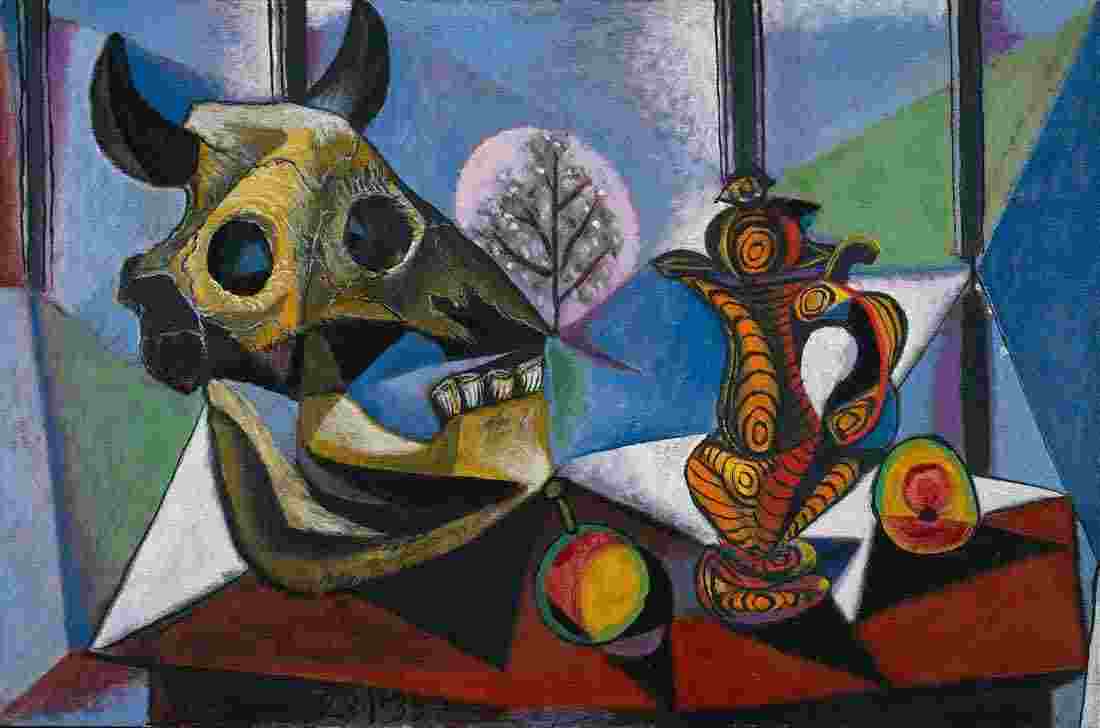
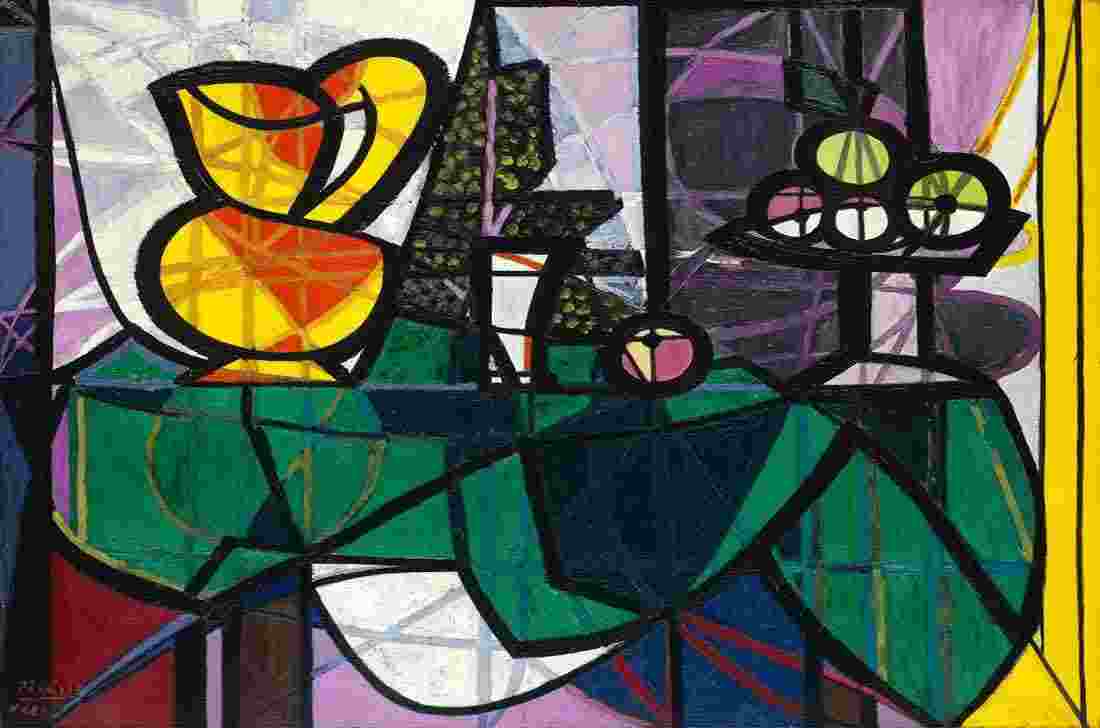
Begin by asking the children if they can guess what kinds of colors might be considered warm and then cool. Ask them to think of something that keeps us warm, leading them to name the sun. What colors are in the sun? Reds, yellows and oranges. These are what we call the warm colors and warm colors tend to jump out of the picture plane. Name something that is cool. Lead the children to name the ocean. The colors in the ocean are blues, greens and purples, and on really hot days we can jump into the ocean to cool ourselves off. Cool colors tend to go back in the picture plane. They do not jump out like the warm colors do. We are going to paint our flower drawings with the warm colors and our backgrounds with the cool colors. You may use individual colors or you may mix each set of colors, but you may not mix the two sets, warm and cool together. Begin with the largest paint brush you have available and paint the petals of your flower, once these are complete you might take a smaller brush to add warm details for example in the center of your flower. Next, after cleaning your brush in water, paint your background using only cool colors. Put your work in a safe place to dry.
Conclusion:
Have the children name the warm and cool colors for you. Ask them to tell you what warm colors do on a picture plane. When the paintings are all dry, have the class look at each painting to find the one thing they like best about it. Mount the paintings and hang them up for everyone to enjoy.
Artwork and Examples used in this lesson
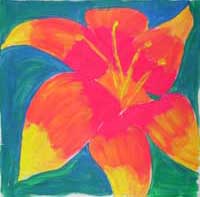
Teacher Example
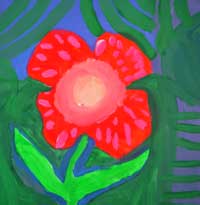
Student Artwork
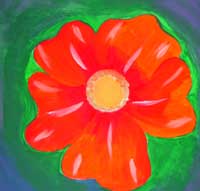
Student Artwork




Arttango © All Rights Reserved 2013. All logos and images used on this site are the property of the rightful owner